English (UK)
  Italian (IT)
  French (FR)
  Japanese (JA)
  German (DE)
  Russian (RU)
  Spagnolo (ES)
  Português (pt-PT)
  Nederlands (nl-NL)
  Danish (DA)
  Czech (CZ)
  Polacco (PL)
  Turkish (TR)
  Korean (KR)
  Magyar
  Українська (Україна)
  简体中文(中国)
SUMMARY
Starting dates: every Monday
Duration: min. 2 weeks
Lessons: 6 per day, 30 per week
Levels: from 3rd above
Participants: max. 14 per class
Dates: click here
Prices: click here
More information: click here
To enroll: click here
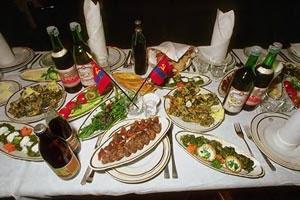
This course consists of 4 intensive Italian language lessons per day plus 2 daily private language lessons specific to table conversation and Italian wines.
The course is aimed at those who are interested in the language of food and wine either for professional reasons or for personal passion.
The program focuses on the language of these two important sectors of the Italian economy. Its purpose is to provide students with both the basic vocabulary and frequently used technical expressions.
The course analyzes the nation’s main recipes as well as regional culinary specialties describing along the way: typical products, most commonly used preparations, and presentations of important books of ancient and modern recipes. One of many: the recipes of Pellegrino Artusi.
During the course, also a short history of Italian cuisine is reviewed.
Regarding wines, students study the most important wines from every region of Italy with a special focus on the different technologies of production and conservation.
After identifying the vocabulary and basic technical expressions, students have the opportunity to practice through targeted exercises and vocal conversations.
At the request of students, guided visit to markets, hostels, restaurants and manufacturers may be organized. This course can be combined with practical cooking and enology courses organized by the school.
Due to the very wide scope of material studied, all subjects cannot be fully covered in the two -week program. Because of this, students may start, planning with a professor, a more focused program with objectives based on their own needs.
If students require improving skills in a particular field for professional reasons, we recommend expressing these needs before their arrival in order to allow the teacher to prepare a specific program and handpick a selection of suitable texts.
If, for example, a student works in a restaurant, the course will address different types of menus and markets which pertain to certain products and tastes of Italian consumers. If the student is a chef, the course will address the major Italian recipes and the use of popular ingredients.
Topics that may be covered during the course:
Table:
sauces, ‘primi’ and ‘secondi’ dishes, fried specialties, soups, minestrone, fish soup, pasta, rice, gnocchi, polenta, pizza, eggs, fish, meat, vegetables, sweets.
Wine:
characteristics of Italian wines, wine classification, regulation of wine, reading labels, main types of grapes, areas of production, technology, wines by region, the wine market.